
Selecting a CVD (Chemical Vapor Deposition) furnace tube is a crucial decision because it directly impacts the success, reproducibility, and operating cost of your experiments or production. This is not a simple “standard product” purchase; it requires systematic evaluation.
Below is a detailed and structured guide for choosing a CVD furnace tube. You can assess your options from the following aspects:
Clarify Core Process Requirements (The Foundation of All Choices)
Before comparing any equipment, you must first clarify your “use case”:
Target material and process:
What material do you plan to grow? (For example: graphene, carbon nanotubes, hBN, TMDs, oxide thin films like ZnO, nitride films like AlN.) Is it a thin film or powder? Different materials have completely different requirements for temperature, atmosphere, and uniformity.
Maximum operating temperature:
What maximum temperature do you need? (For example: 1000°C, 1200°C, 1500°C, or even higher.) This determines the selection of heating elements and furnace materials.
Temperature uniformity:
What are your requirements for temperature zone length and uniformity? (For example: ±1°C @ 1000°C over 200 mm.) Achieving high-quality uniform thin films usually requires extremely high uniformity.
Atmosphere environment:
In what atmosphere will you operate? (Such as high vacuum (<10⁻⁵ Pa), inert gases (Ar, N₂), reactive gases (H₂, CH₄, O₂).) Gas type and pressure determine the tube’s sealing performance and material compatibility.
Sample size and throughput:
What is your substrate size? (e.g., 1×1 cm² silicon wafer, 4/6-inch wafer, or large foil pieces?) Are you processing a single sample at a time or do you need mass production? This determines the tube diameter and length.
Budget range:
Your budget determines how much compromise you can make regarding performance, brand, and automation.
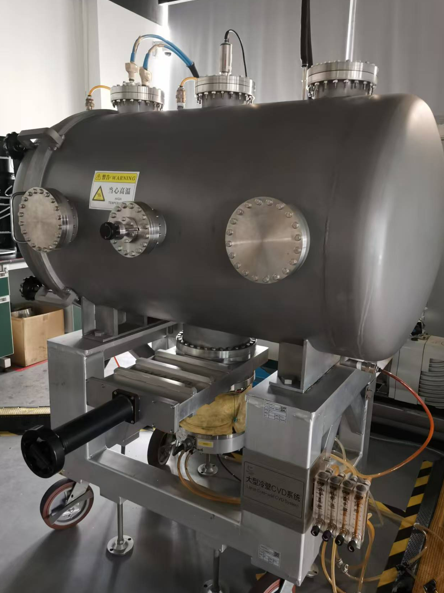
In-Depth Analysis of Core Components
Based on your process requirements, evaluate the following core components:
1. Furnace Tube Material – Directly Exposed to High Temperature and Atmosphere
| Materiāls | Approx. Max Temperature | Advantages | Disadvantages | Applicable Scenarios |
|---|---|---|---|---|
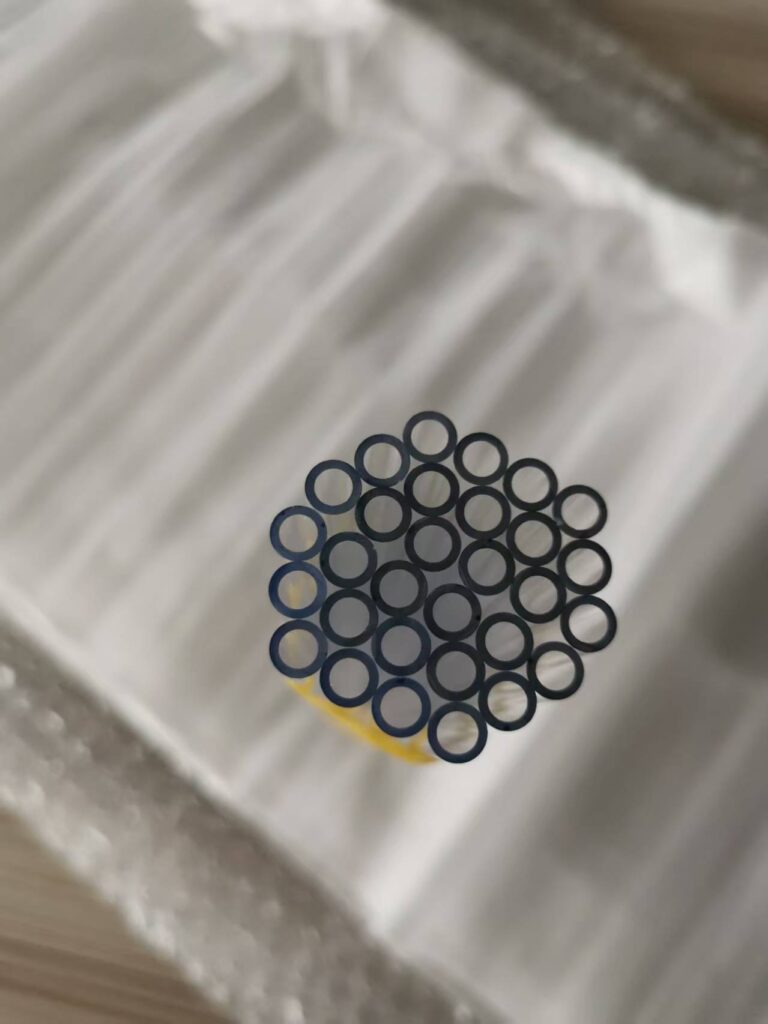
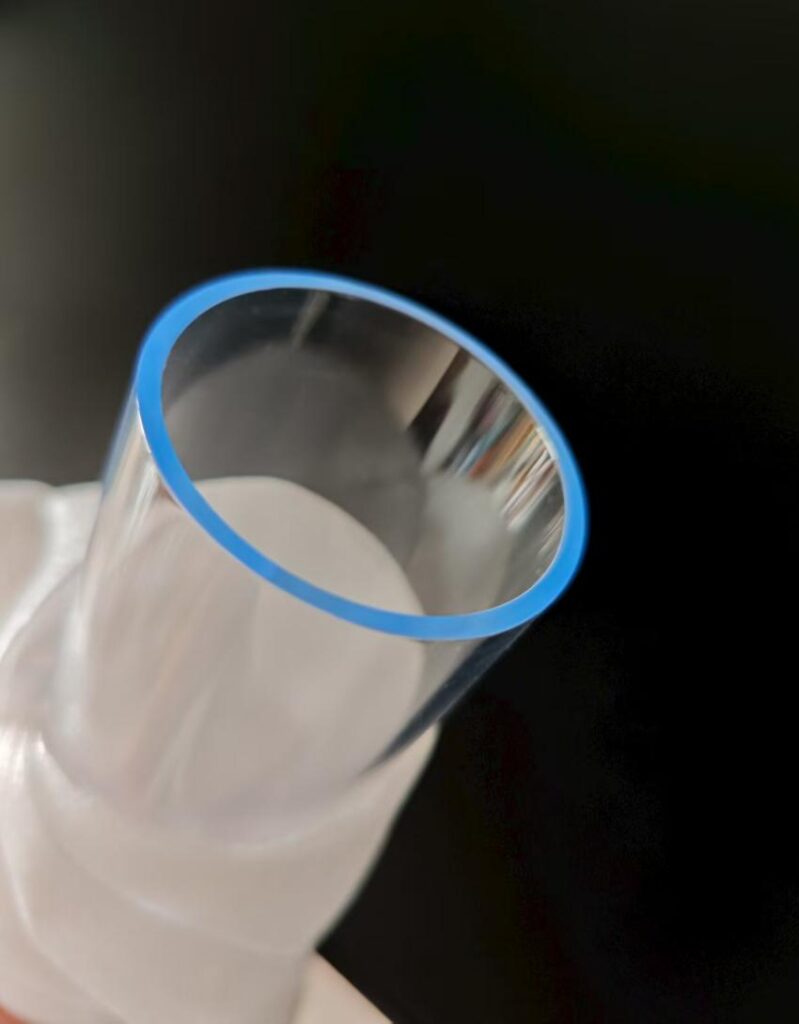
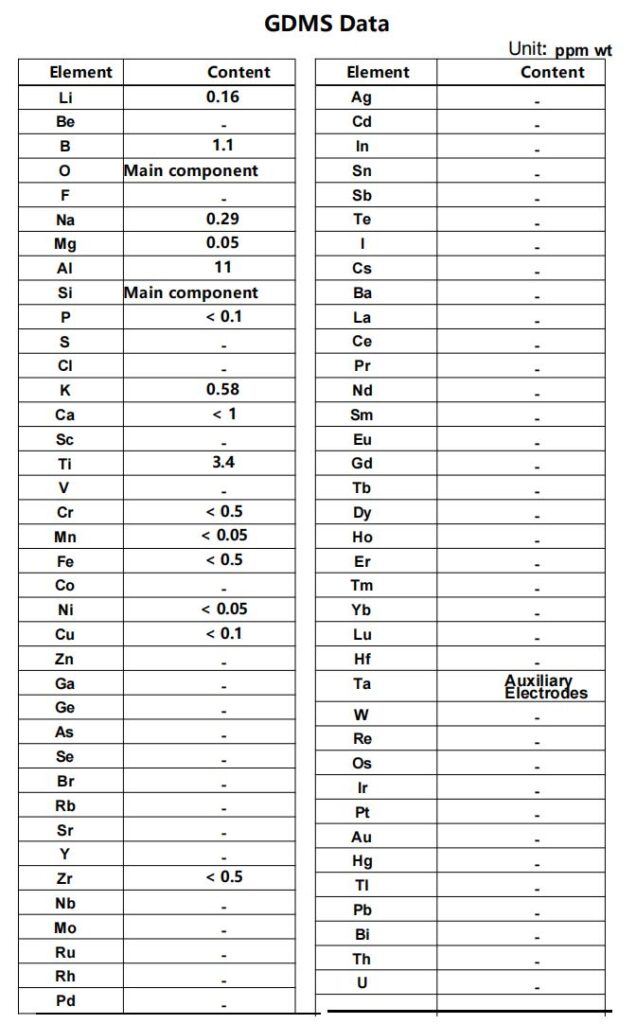
| Quartz glass | 1200°C (higher for short periods) | High purity, chemically inert, transparent (good visibility), relatively low cost | Brittle, fragile, poor thermal shock resistance, devitrification in hydrogen atmospheres at high temperature, poor resistance to alkali metals | Most common, suitable for most CVD without alkali metals or fluorine, and for oxidation/reduction/inert atmospheres |
| Stainless steel | ~400°C (higher requires lining) | High mechanical strength, not fragile | Poor high-temperature performance, oxidizes easily, contamination source at high temperature | Mainly for outer vacuum chambers and low-temperature reaction zones |
| Alumina ceramic | 1600–1800°C | High-temperature resistance, better thermal shock resistance than quartz, abrasion-resistant | Opaque, expensive, complex sealing, may contain trace impurities | Ultra-high temperatures (>1200°C) or special atmospheres incompatible with quartz |
| Silicon carbide ceramic | 1600°C | High-temperature resistance, good thermal conductivity, excellent stability | Expensive, oxidizes in oxygen atmosphere, opaque | High-temperature CVD, especially where rapid heating/cooling is required |
Conclusion:
For most research and standard applications, quartz tubes are the first choice. Only use ceramic tubes under ultra-high-temperature or corrosive conditions where quartz cannot function.
2. Heating Elements and Furnace Structure – Determine Temperature Zone & Uniformity
Resistance Wire Heating:
- Kanthal (Fe-Cr-Al): Max ~1200°C, cost-effective, used in air.
- SiC rods: Up to ~1600°C, long lifetime, but resistance changes over time and requires power regulation.
- MoSi₂: Up to ~1800°C, used in oxidizing atmospheres, becomes brittle over time.
Number of heating zones:
- Single-zone: Simple, lowest cost, but large temperature gradients and short uniform zone.
- Multi-zone (typically 3-zone): Standard for high-quality CVD. Independent zone control creates long uniform zones and precise heating/cooling profiles—critical for high-quality uniform films.
3. Vacuum and Gas Delivery System – Ensures Purity and Controllability
Vacuum level:
Choose pumps based on process needs: mechanical pump (down to 10⁻² Pa), turbomolecular pump (down to 10⁻⁵ Pa or better), or dry pump.
Sealing:
The system must have excellent leak tightness; all connections should use metal seals or high-vacuum fluororubber O-rings.
Gas Delivery System:
- Mass Flow Controllers (MFCs): Mandatory for precise gas flow control—essential for reproducibility.
- Gas lines: Polished stainless-steel tubing with VCR or Swagelok high-vacuum fittings to reduce dead volume and adsorption/desorption.
- Vacuum gauge: At least one Pirani gauge for monitoring low–medium vacuum.
- Exhaust treatment: Mandatory. Choose scrubbers, cold traps, or burners depending on exhaust gas reactivity.
4.Control System & Software – Enable Automation and Reproducibility
Control method:
Modern CVD systems should have fully automatic PLC + touchscreen HMI control.
Programming capability:
Must support complex multi-segment temperature programs (ramp rates, target temperatures, hold times, cooling rates) and multi-segment gas flow programs.
“One-click automated process completion” is essential for reproducible experiments.
Safety protection:
Over-temperature, water/flow interruption, over-current protection, and vacuum interlock (e.g., “cannot heat if vacuum is insufficient”) are required to ensure equipment and operator safety.
Summary of the Purchasing Process
- Define a requirement list:
Based on the first section, clearly list your technical specifications (T°max, uniformity, atmosphere, sample size, etc.). - Identify suppliers:
Find multiple reputable suppliers (domestic or international), send them your requirement list, and request detailed technical proposals and quotations. - Evaluate technical solutions:
Compare their proposals against this guide—tube material, heating configuration (number of zones), vacuum system (pumps, sealing), gas flow configuration (MFC brand/quantity), and control system features.
Request the furnace’s temperature uniformity test report. - Assess after-sales service and support:
- Installation & training: Does it include professional setup and user training?
- Warranty policy: What is the warranty period for core components (furnace chamber, heating elements)?
- Technical support: Can they provide fast and professional troubleshooting? Is spare-part supply reliable?
- User feedback: Contact existing users to understand real performance and service quality.
Final Reminder
For CVD processes, temperature uniformity and gas flow field uniformity are the keys to producing high-quality, uniform materials.
A well-designed multi-zone furnace and a CFD-optimized gas inlet (e.g., showerhead) are often more important than extreme maximum temperature or ultra-high vacuum.
Do not focus on a single parameter and neglect the overall design balance.

 Latvian
  English
  Estonian
  Arabic
  Bulgarian
  Polish
  Danish
  German
  Russian
  French
  Finnish
  Korean
  Dutch
Dutch  Czech
Czech  Lithuanian
  Romanian
  Portuguese
  Japanese
  Swedish
  Norwegian
  Slovak
  Slovenian
  Turkish
  Ukrainian
  Spanish
  Greek
Greek  Hungarian
  Italian
  Indonesian