
The applicability of alumina tubes (Al₂O₃) under humid nitrogen (with water) combined with KOH depends on several factors—mainly temperature, KOH concentration, and the form of water present.
1. Room Temperature or Low-Temperature (≤100°C) Humid Nitrogen + KOH Solution
Applicability: Short-term use is acceptable, but long-term use requires caution.
Alumina exhibits good corrosion resistance to low-temperature KOH solutions (concentration <30%), as a passivation layer can form on the Al₂O₃ surface.
However, with continuous contact with liquid water, KOH will slowly dissolve Al₂O₃ (though the reaction rate is low). Over time, this may lead to wall thinning or surface roughening.
Sealing risk: Water vapor may infiltrate flange sealing gaskets (such as silicone O-rings), causing swelling or aging.
Recommendations:
- Use PTFE seals or fluoroelastomer O-rings, which resist alkali and moisture.
- Regularly inspect the inner wall of the alumina tube for fogging or corrosion marks.
2. High-Temperature (>100°C) Humid Nitrogen + KOH Vapor / Molten Alkali
High-temperature steam (>200°C):
Water vapor accelerates the corrosion of alumina by KOH, forming potassium aluminate (KAlO₂) and aluminum hydroxide gel.
The higher the temperature, the faster the reaction rate—for example, at 500°C, the corrosion rate may reach 0.1 mm/year.
Molten KOH (>400°C):
Alumina tubes are rapidly attacked, especially in the presence of water vapor, which promotes alkali ion migration.
Conclusion:
When the temperature exceeds 200°C, alumina tubes are not recommended for use in humid nitrogen + KOH environments.
Alternative Materials:
- Nickel-based alloy tubes (e.g., Inconel 600): Highly resistant to high-temperature alkali corrosion but more costly.
- Molybdenum or tantalum tubes: Suitable for anhydrous high-temperature alkali conditions (note that tantalum oxidizes easily in humid oxygen).
- Quartz tubes (for anhydrous conditions only): Though not resistant to KOH, they can be used short-term at low temperature in humid nitrogen, provided that direct liquid water contact is avoided.
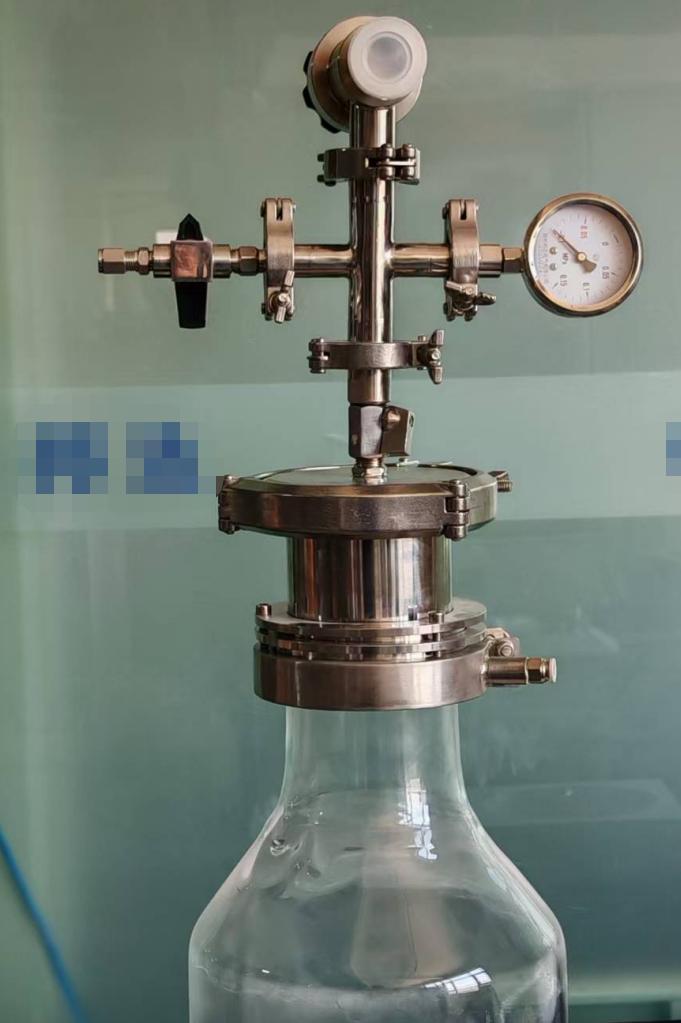
3. Design Recommendations for Risk Reduction
If the use of an alumina tube is unavoidable, the following measures can reduce risk:
- Protective inner coating: Apply yttria (Y₂O₃) or zirconia (ZrO₂) coating on the inner wall for enhanced alkali resistance.
- Drying pre-treatment: Before introducing humid nitrogen, purge the system with dry nitrogen to remove residual liquid water.
- Thermal isolation: Place KOH in the central high-temperature section of the alumina tube, while keeping both flanges at low temperature (water-cooled) to prevent vapor condensation.
Zhrnutie
| Condition | Alumina Tube Applicability | Risk Factors | Recommended Alternative |
|---|---|---|---|
| Room temperature humid N₂ + dilute KOH | Short-term use acceptable | Slow corrosion, seal aging | PTFE seal + periodic inspection |
| High-temperature humid N₂ + KOH vapor | Not suitable | Rapid corrosion, wall perforation | Nickel-based alloy tube |
| Molten KOH + water vapor | Strictly prohibited | Damage within hours | Molybdenum/Tantalum tube (anhydrous) |

 Slovak
  English
  Estonian
  Arabic
  Bulgarian
  Polish
  Danish
  German
  Russian
  French
  Finnish
  Korean
  Dutch
Dutch  Czech
Czech  Latvian
  Lithuanian
  Romanian
  Portuguese
  Japanese
  Swedish
  Norwegian
  Slovenian
  Turkish
  Ukrainian
  Spanish
  Greek
Greek  Hungarian
  Italian
  Indonesian